What is PETG filament? What it's good for (and what it isn't)
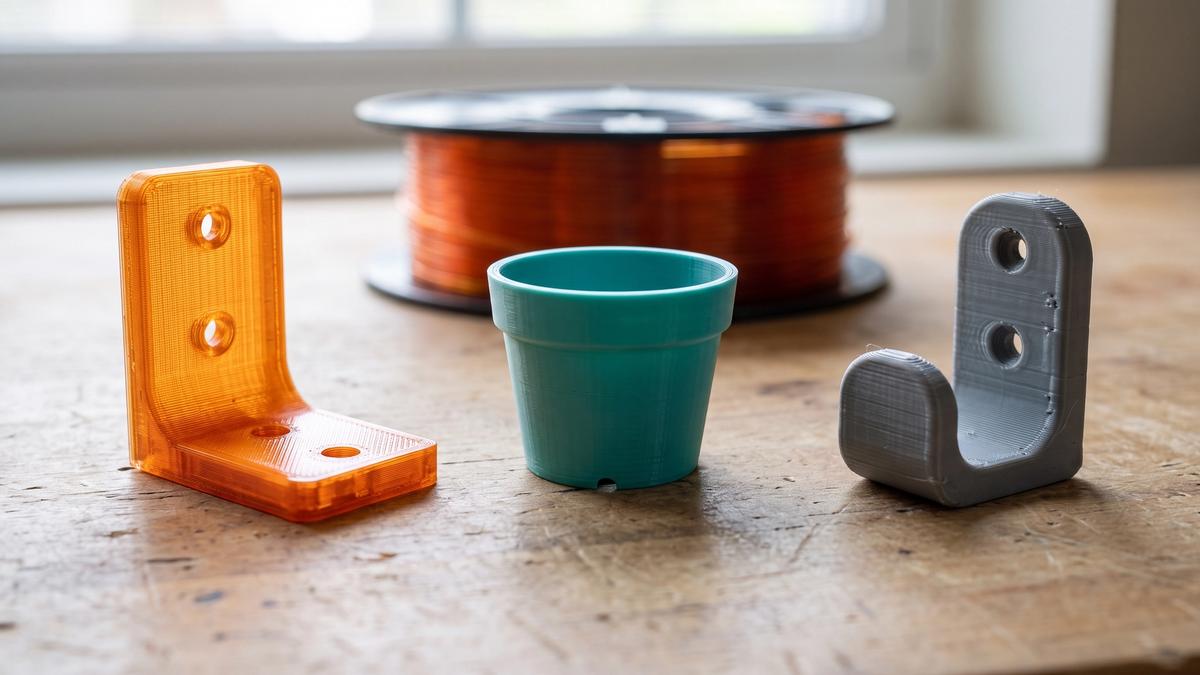

PETG is the filament most people reach for once PLA stops being enough. It's tougher, handles more heat, shrugs off water, and still prints on an ordinary open-frame printer. That combination is why it has become the default material for functional prints - the brackets, clips, hooks, and enclosures that actually get used.
It's also surrounded by a few persistent myths: that it's simply "stronger than PLA", that any PETG print is food safe, and that it's built for years in the sun. This guide covers what PETG actually is, what it's genuinely good for, and where you should pick something else.
What PETG actually is
PETG stands for polyethylene terephthalate glycol-modified. The base plastic, PET, is the one used in drink bottles. On its own, PET tends to crystallize as it cools, which makes it cloudy, brittle, and difficult to print.
The "G" fixes that. Adding glycol during manufacturing stops the plastic from crystallizing, so it stays clear, tough, and slightly flexible - and it melts and flows in a way that suits a 3D printer's nozzle. The result is a material that sits between PLA and ABS: easier to print than ABS, and much tougher than PLA.
What PETG filament is used for
PETG earns its place wherever a part has to survive real use rather than sit on a shelf.
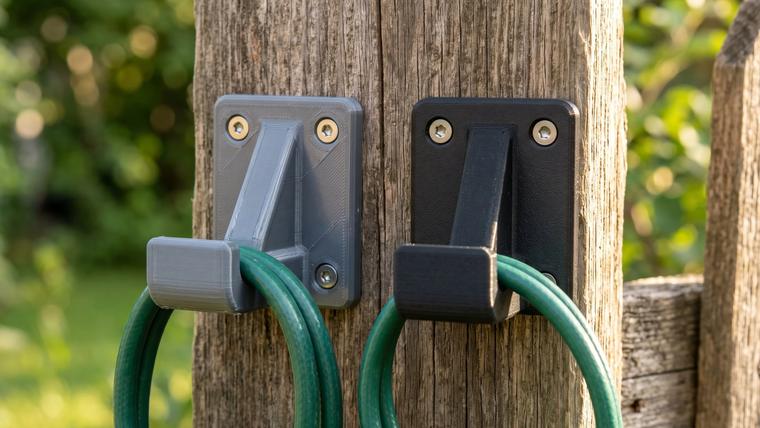
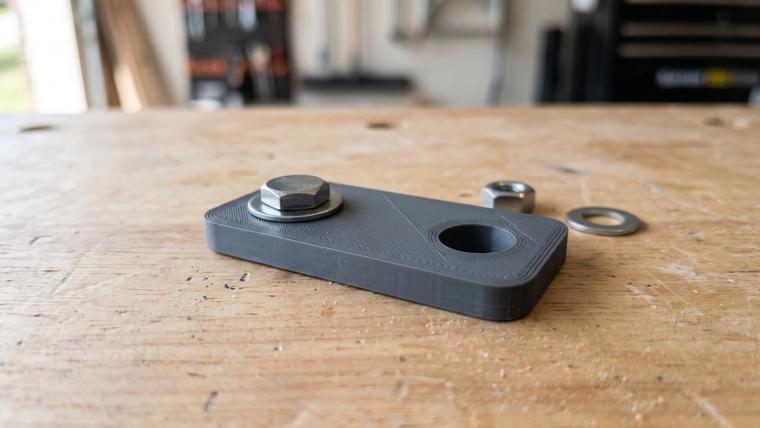
Everyday functional parts. Brackets, wall hooks, cable clips, drawer organizers, tool holders, and replacement parts for things around the house. These get loaded, knocked, and flexed, and PETG takes that without cracking.
Anything that snaps, clips, or flexes. Because PETG bends before it breaks, snap-fit lids, clips, and latches survive being opened and closed repeatedly. The same part in PLA often cracks at the thinnest point after a few uses.
Parts that get wet. Finished PETG parts tolerate water and humidity well, so planters, bathroom organizers, garden fittings, and parts for aquarium or plumbing projects are common uses.
Parts that get warm. PETG's glass transition - the point where it starts turning from rigid to rubbery - sits around 80°C, roughly 20°C above PLA. That's not a safe working temperature, though: a part under load can start to deform well before it, and the exact limit depends on the brand and the part. For real numbers, check the heat deflection temperature on your filament's datasheet. In practice, PETG handles everyday warmth that deforms PLA, like a car interior on a warm day.
Wearables and props that get handled. Cosplay pieces, costume armor, and props that travel to conventions take knocks that crack PLA, and they sit in hot cars. PETG handles both.
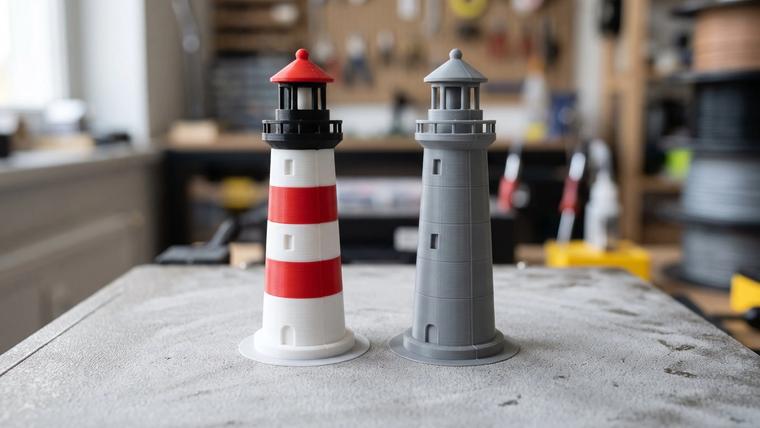
Translucent and light-diffusing parts. Clear and translucent PETG prints with a glossy, glass-like look, which makes it popular for lamp shades, light diffusers, and display pieces.
What PETG isn't good for
Knowing where PETG falls short saves more failed prints than any setting.
Fine-detail miniatures. PETG strings more than PLA, and the fine wisps are hard to clean off tiny features. For tabletop miniatures, PLA is still the better FDM material - our FDM miniature guide explains why.
Parts that must stay rigid. PETG is less stiff than PLA. A long, thin PETG shelf bracket flexes under load where a PLA one would stay straight (until it snaps). If stiffness matters more than toughness, PLA or a carbon-fiber-filled blend can be the better choice.
Years of direct sunlight. Water and sunlight are two different problems. PETG handles water and weather well, but standard PETG isn't formulated for years of intense UV - over time it can weaken, discolor, and turn brittle. For parts that sit in full sun permanently, ASA is usually the better choice.
Real heat. Engine bays, parts near heaters, anything that runs hot for long periods - that's ABS, ASA, or polycarbonate territory.
Food contact without checking. A "food-safe" label on the spool doesn't automatically make a printed part food safe - more on this below.
Is PETG stronger than PLA?
This is the most repeated claim about PETG, and it's only half true.
On paper, the two are close. Measured tensile strength - how hard you can pull before a part breaks - is similar for both materials, and varies more between brands than between PLA and PETG as a whole. PLA is actually the stiffer of the two.
Where PETG wins clearly is toughness. PLA fails suddenly and shatters. PETG bends, stretches, and absorbs impact before it gives way, and published tests consistently put its impact resistance well above PLA's. In daily life, "harder to break" is usually what people mean by "stronger" - and by that measure, PETG wins comfortably.
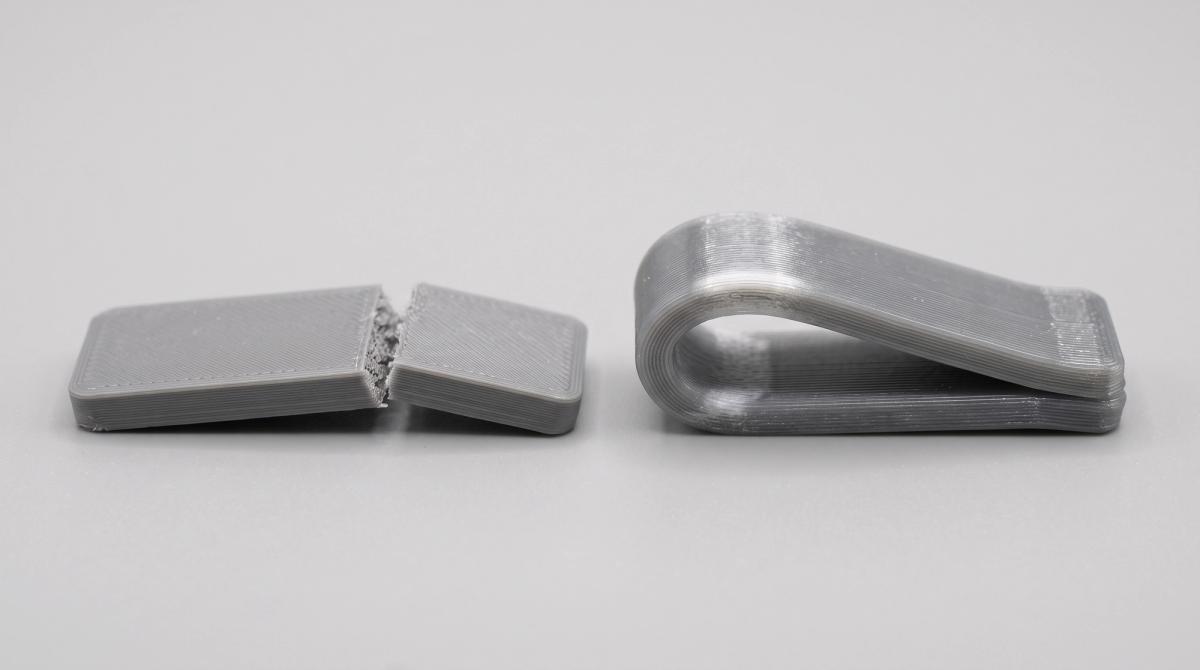
| PLA | PETG | ABS / ASA | |
|---|---|---|---|
| Stiffness | Highest | Lower - flexes | Lower |
| Toughness | Low - shatters | High - bends first | High |
| Heat resistance | Low | Moderate | Higher |
| Ease of printing | Easiest | Moderate | Hardest - needs an enclosure |
| Outdoor suitability | Poor | Good, but not for years of full sun | Good; ASA is best in full sun |
| Typical use | Models, miniatures, decor | Functional parts, wet or warm spots | Hot environments, demanding outdoor parts |
Actual properties vary by filament formulation, print settings, and part geometry.
That last point matters more than the material itself. A printed part is weakest between layers, so how it's oriented relative to the load, how many walls it has, and how well its layers bonded can change its strength more than switching from PLA to PETG. The filament sets the ceiling; the print settings decide how close you get to it.
PETG, PLA, or ABS: which should you choose?
- PLA when a part needs to stay rigid, look sharp, and print easily - models, miniatures, decor, and indoor parts under light load.
- PETG when a part needs to survive drops, flexing, water, or moderate warmth - most functional prints.
- ABS or ASA when heat goes beyond what PETG handles, or a part lives outdoors in full sun. Both need an enclosure; PETG in most cases doesn't. Our ABS guide covers when stepping up is worth it.
Is PETG food safe?
It depends on much more than the plastic, so treat any blanket "yes" with caution.
The resin can be. PETG is used for food packaging, and some filaments are made from resin that meets food-contact requirements. Check the filament maker's own documentation - a food-contact claim should be specific, not just a word on the box.
The filament adds variables. Colorants and additives differ between brands and even between colors of the same brand, so one food-contact-rated product doesn't make all PETG safe.
The printer and the print matter too. Some brass nozzle alloys contain small amounts of lead, which is why stainless steel nozzles are used for food-related prints. And the fine gaps between layers are hard to clean, which matters for anything used repeatedly.
The application decides. A cookie cutter used briefly with dry dough is a very different case from a cup, a container, or anything holding liquids or storing food. Food-safe coatings can seal the surface, but they aren't an automatic fix - the coating itself has to be suitable for the use.
For repeated or long-term contact with food or drink, use a material and process specifically documented for that purpose. For anything else, a quick contact with dry food is the most a printed part should be trusted with.
What PETG is like to print
PETG prints on any printer with a heated bed and doesn't need an enclosure. It does have its own habits.
Temperatures. A typical starting range is a 220-250°C nozzle and a 70-90°C bed, but PETG varies a lot between brands - in temperature, cooling, and speed. The label or datasheet of your specific spool is the first source for settings; tune from there.
Stringing. PETG leaves fine strings between parts of a model more readily than PLA. The usual fixes, roughly in order: dry the filament, lower the nozzle temperature a little, tune retraction, and reduce long travel moves across open space. Damp filament is behind more stringing than any setting.
Less cooling, slower speeds. PETG's layers bond best when they stay hot a little longer, so it wants less part-cooling fan than PLA - which in turn makes overhangs droop sooner. It's also usually printed slower: pushed too fast, it leaves weak, matte layers and more stringing, even on printers that fly through PLA.
It can stick too well. On a smooth PEI sheet, PETG can bond so strongly that it tears pieces out of the surface when you remove the print. A textured PEI plate avoids the problem, and on smooth PEI a thin layer of glue stick works as a release layer between the print and the sheet.
Keep it dry. PETG absorbs moisture from the air faster than PLA. You don't need to dry it before every print, but a spool left open in a humid room can go bad within weeks. Signs are popping or hissing from the nozzle, heavy stringing, and rough, weak prints - that's when to dry it. Store it sealed with desiccant to avoid the problem. Our filament guide covers storage in more detail.
PETG-CF and PETG-GF
You'll also see PETG blended with chopped carbon fiber (PETG-CF) or glass fiber (PETG-GF). The fibers make parts noticeably stiffer and more dimensionally stable, with a matte finish that hides layer lines well. They aren't simply a "better PETG": they're usually less tough than plain PETG, print differently, and the fibers are abrasive enough to wear out a standard brass nozzle quickly - a hardened steel nozzle is the norm. Our nozzle guide covers what abrasive filaments do to brass.
Finishing PETG
PETG is harder to finish than PLA. It can be drilled, cut, and trimmed like most plastics, but sanding takes more care: with coarse grits and fast strokes it tends to go fuzzy rather than sanding smooth, so finer grits and wet sanding work better, and there's no practical home solvent for vapor smoothing it the way acetone smooths ABS.
The reliable route for a smooth, paintable surface is filler primer: a couple of thin coats, a light sand between them, and the layer lines disappear. Our guide to smoothing 3D prints compares every method by material.
Sources: published PLA and PETG tensile and impact test data; filament manufacturers' technical datasheets.
Frequently asked questions
What is PETG filament?
PETG is a glycol-modified version of PET, the plastic used in drink bottles. The glycol stops it from crystallizing, which makes it tough, slightly flexible, and easy enough to print on a standard FDM printer with a heated bed.What is PETG good for?
Functional parts that have to survive real use: brackets, hooks, clips, snap-fit parts, planters, props, and anything that gets wet, warm, dropped, or flexed. It's less suited to fine-detail miniatures, parts that must stay rigid, and years of direct sunlight.Is PETG stronger than PLA?
It's tougher, not stiffer. Tensile strength is similar, and PLA is actually more rigid, but PETG absorbs impacts and bends where PLA shatters. For parts that get dropped or flexed, PETG is the more durable choice.Can PETG be used outdoors?
For many outdoor uses, yes - it handles water and weather far better than PLA. Water resistance and UV resistance are different things, though: standard PETG isn't made for years of intense sun, so for parts in full sun permanently, ASA is usually the better choice.Is PETG food safe?
It depends. Some PETG filaments are made from food-contact-compliant resin, but additives, the nozzle, and the layered surface all affect whether a printed part is suitable. Check the filament maker's documentation, and for repeated or long-term food contact, use a material and process specifically documented for it.What temperature can PETG handle?
Its glass transition is around 80°C, roughly 20°C above PLA, but that isn't a safe working limit - parts under load can deform well below it. For a specific part, check the heat deflection temperature on the filament's datasheet and leave a margin.Do I need an enclosure to print PETG?
No. PETG prints well on open-frame printers with a heated bed. An enclosure can help keep drafts off large prints, but it isn't required the way it is for ABS.
About the author
Written by
Ethan MillerI’m a 3D printing specialist with a background in mechanical design and hands-on experience with FDM 3D printing. I focus on filament selection, slicer settings, print optimization, and troubleshooting common printing issues. I enjoy testing different materials and printing techniques and sharing practical guides that help makers get more consistent and reliable results from their printers.