ABS filament: when it's worth the trouble (and when it isn't)
· 6 min read
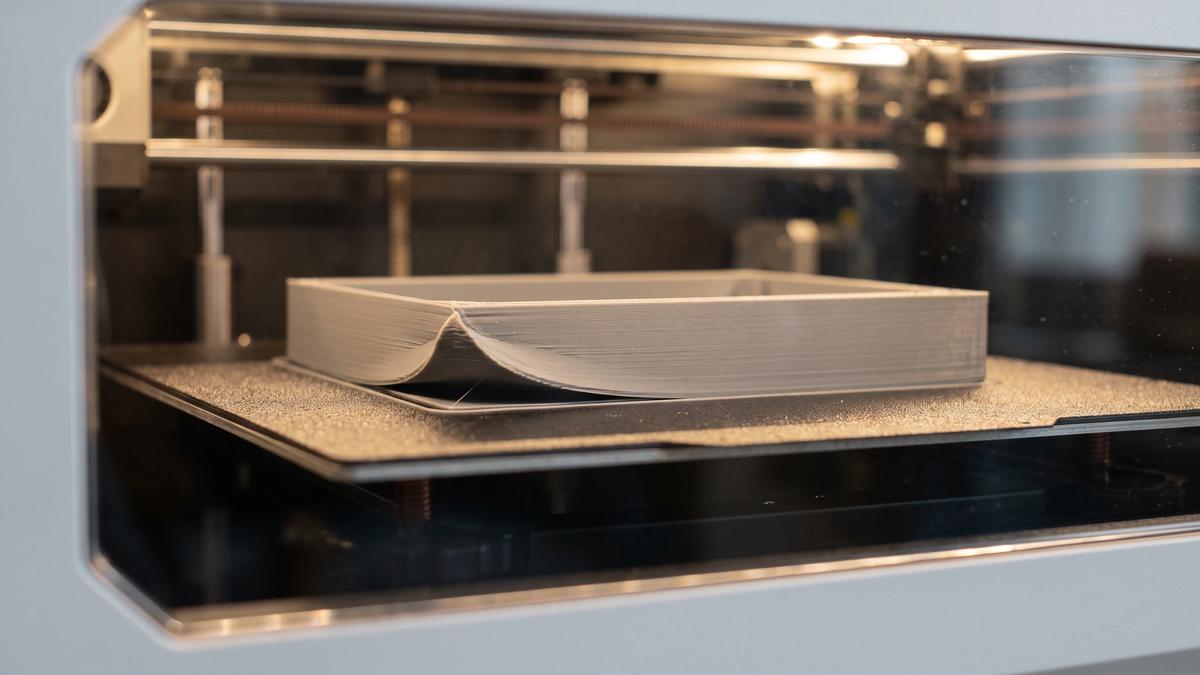
ABS is one of the oldest filaments in desktop 3D printing and the one most likely to waste an afternoon. It warps off the bed, splits mid-print, and smells while doing it. It's also the only common filament that survives a hot car, takes real impacts, and can be smoothed glass-smooth with acetone. This guide is mostly a decision: whether your part actually needs ABS - because for most home printing it doesn't - and if it does, exactly what to change so it prints.
ABS earns its difficulty in three situations, and only three:
If your part doesn't need one of those three, use PETG instead. PETG covers the vast majority of functional printing with most of ABS's toughness, no enclosure requirement, no fume management, and none of the warping fight. That's not a dismissal of ABS - it's what makes the cases where ABS is the answer worth the setup.
And for outdoor parts, reach for ASA rather than ABS: it's essentially ABS reformulated for UV resistance, printing much the same way but surviving sunlight that yellows and embrittles ABS.
ABS shrinks as it cools - significantly more than PLA. That single property causes every ABS problem you'll encounter.
In open air, a print's exposed surfaces and upper layers cool faster than the material underneath. The cooler outer layers try to contract while still bonded to warmer inner ones, and the resulting internal stress goes somewhere: corners curl off the bed (warping), or layers pull apart mid-print (delamination - a visible crack running up a wall).
Once you see it that way, the entire solution is obvious: keep the whole part at a uniform, warm temperature from first layer to last. Almost every ABS technique below is a version of that one idea.
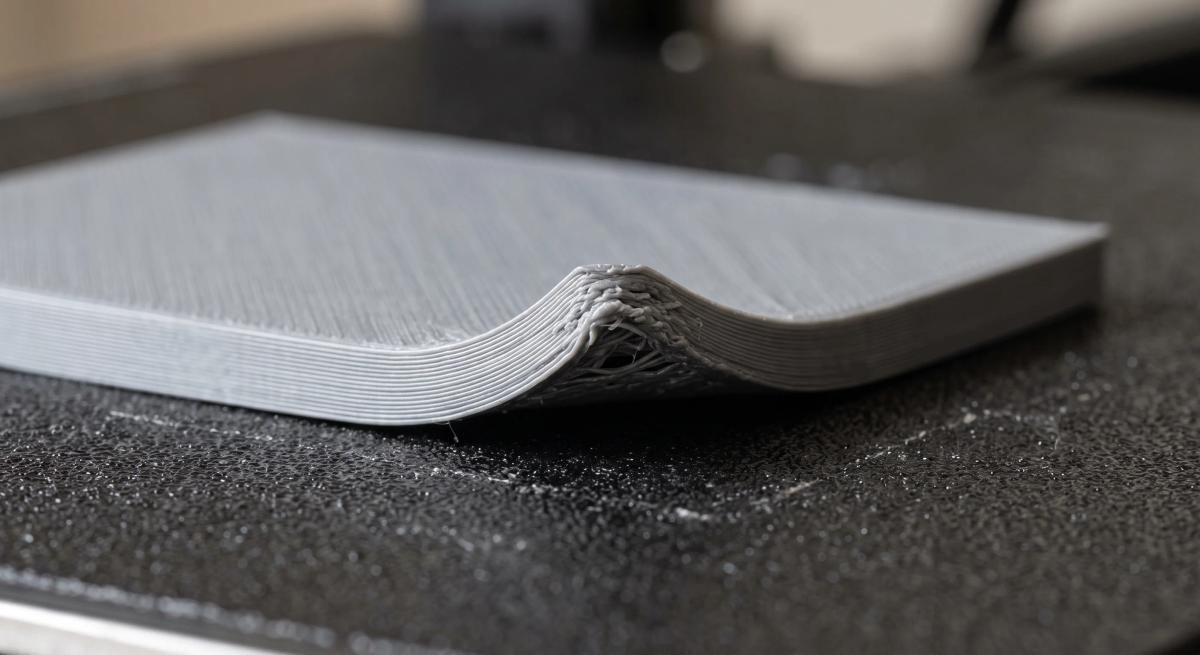
An enclosure traps the printer's own heat and holds the air around the part at roughly 40–60°C, which keeps the part from developing those internal stresses in the first place. For ABS it isn't a nice-to-have - it's the difference between printing and fighting.
What your printer means for ABS:
One critical enclosure warning: printer electronics - power supply, mainboard - are typically rated for cooler ambient temperatures than a hot chamber reaches. Sustained chamber heat can shorten their life. If you build your own enclosure, keep electronics outside it or actively cool them.
The consensus profile across ABS guides is consistent:
| Setting | Value | Why |
|---|---|---|
| Nozzle | 230–250°C | ABS needs more heat than PLA |
| Bed | 90–110°C | Holds the base down while upper layers print |
| Chamber / ambient | 40–60°C | The core anti-warp measure |
| Part cooling fan | Off (or barely on) | Cooling is the enemy here - it's what causes the stress |
| First layer speed | 20–30mm/s | Slow bonding beats fast failure |
| Bed adhesion | Brim, always | More contact area = less corner lift |
| Drafts | None | An open window or AC vent will ruin a print |
Two of these routinely surprise people coming from PLA:
The cooling fan goes off. Everything you learned about aggressive cooling for detail applies to PLA and works exactly backwards for ABS. Cooling is what creates the temperature gradients that warp and split ABS parts.
A brim isn't optional. Large flat ABS parts lift at the corners essentially by default. A generous brim adds bed contact where the lifting force is strongest, peels off in seconds, and saves hours of failed prints.
Also worth knowing: ABS absorbs moisture from the air, and damp filament prints poorly - rough surfaces, weak layers, popping sounds. Store spools sealed with desiccant, and dry them if quality drifts over time.
ABS releases volatile organic compounds - including styrene - while printing. This is the part of ABS ownership people most often shrug off, and the one worth taking seriously.
The practical bar: print in a ventilated space, ideally vented outside, or run an enclosure with an activated carbon filter. Don't run ABS prints for hours in a small room you're sitting in.
One counterintuitive detail worth internalizing: your nose is not a sensor. Human smell detects styrene at concentrations far below the occupational exposure limits, so smelling it doesn't mean you're in danger - but your nose also adapts within minutes and stops registering the odor entirely, while the concentration hasn't changed at all. "I can't smell it anymore" tells you nothing about the air. Set up ventilation once and stop relying on your senses to evaluate it.
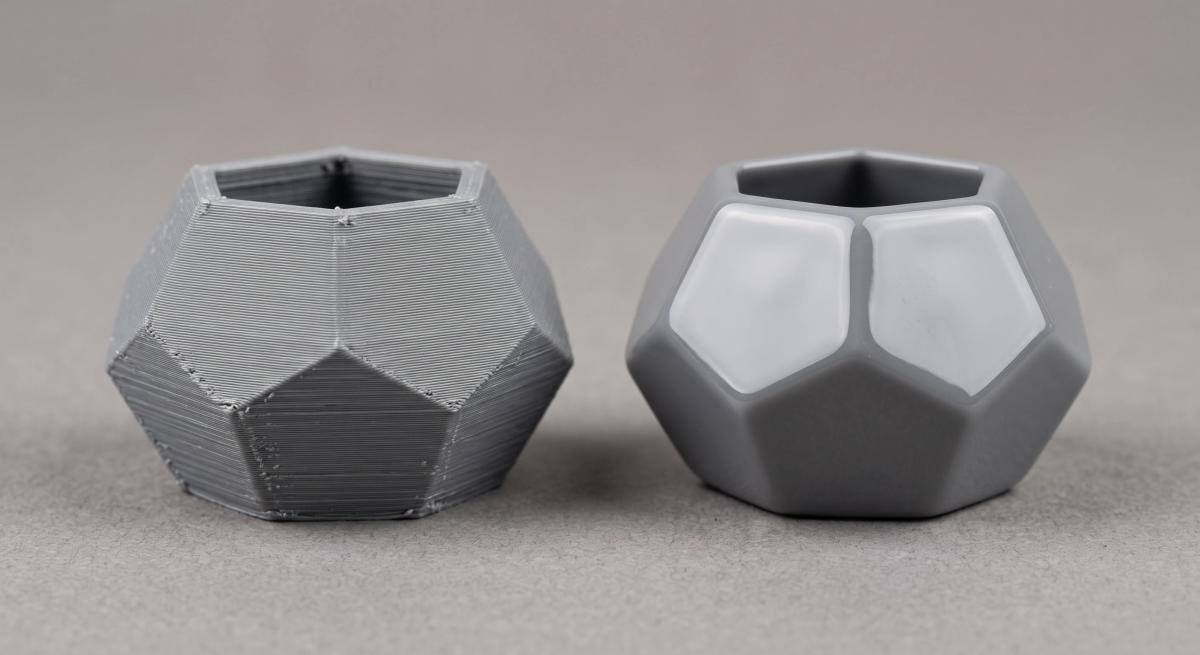
The one thing no other common filament does. Exposing an ABS part to acetone vapor lightly dissolves the surface, which flows together and re-hardens into a glossy, seamless finish - layer lines gone without sanding.
It's genuinely useful for enclosures, props, and display pieces where a smooth shell matters. It also demands respect: acetone is flammable and needs ventilation, and heavy exposure softens fine detail along with the layer lines. Small, geometrically simple parts benefit most.
Corners lifting off the bed → the classic warp. Add a brim, raise bed temperature, close the enclosure, kill any draft, clean the plate.
A crack running up a wall mid-print → delamination from uneven cooling. Raise ambient temperature, confirm the part cooling fan is off, raise nozzle temperature slightly.
Rough surfaces and popping sounds → wet filament. Dry the spool.
A part that printed fine but warps after removal → residual internal stress releasing. Let prints cool gradually in the closed enclosure instead of pulling them off a hot bed into cool air.
ABS is a specialist material, and treating it as one solves most of the frustration around it. For miniatures, models, and display prints - PLA. For everyday functional parts - PETG. For heat, impact, or acetone smoothing on an enclosed printer - ABS, and it's excellent at exactly that.
Written by
Ethan MillerI’m a 3D printing specialist with a background in mechanical design and hands-on experience with FDM 3D printing. I focus on filament selection, slicer settings, print optimization, and troubleshooting common printing issues. I enjoy testing different materials and printing techniques and sharing practical guides that help makers get more consistent and reliable results from their printers.