3D printing filaments: which one to use for what you're actually printing
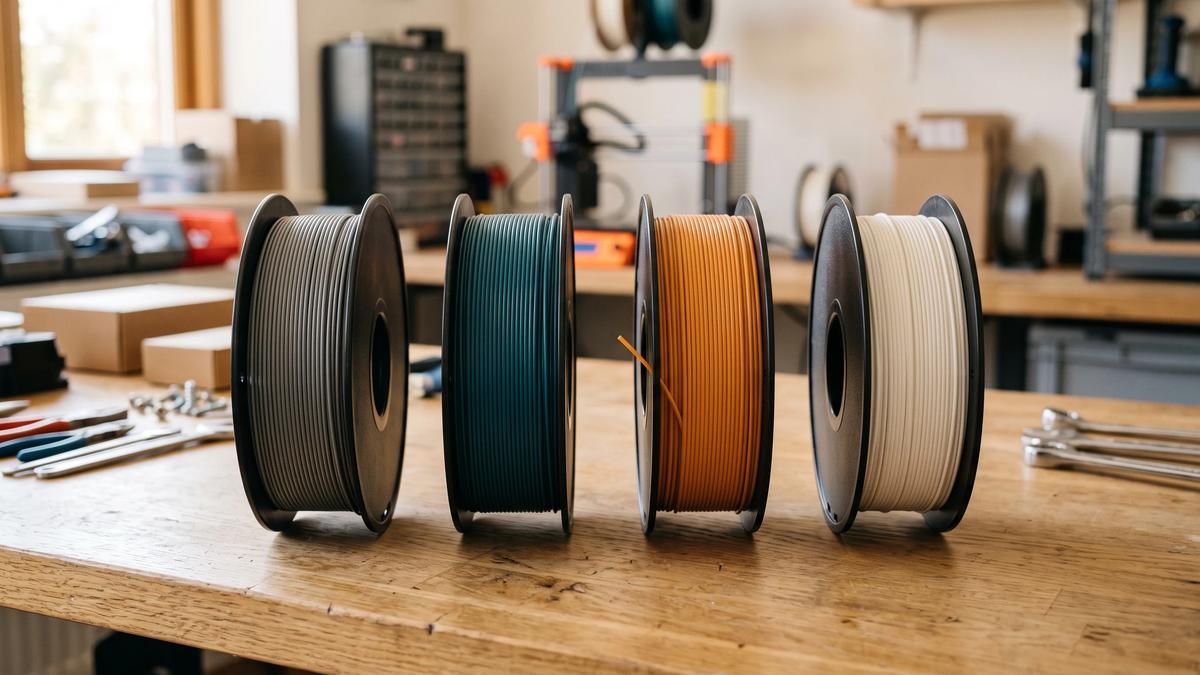

Filament guides usually open with a catalogue of twenty-something materials, most of which you will never load into a printer. This one covers the four that account for nearly all home printing - what each costs, what temperature it wants, what it survives, and where it fails - and then answers the question you actually came with: which one belongs in the thing you're about to print.
Quick comparison
| PLA | PETG | ABS / ASA | TPU | |
|---|---|---|---|---|
| Nozzle temp | 190–220°C | 220–250°C | 230–250°C | 210–250°C |
| Bed temp | 50–60°C | 70–90°C | 90–110°C | 30–60°C |
| Enclosure | No | No | Required in practice | No |
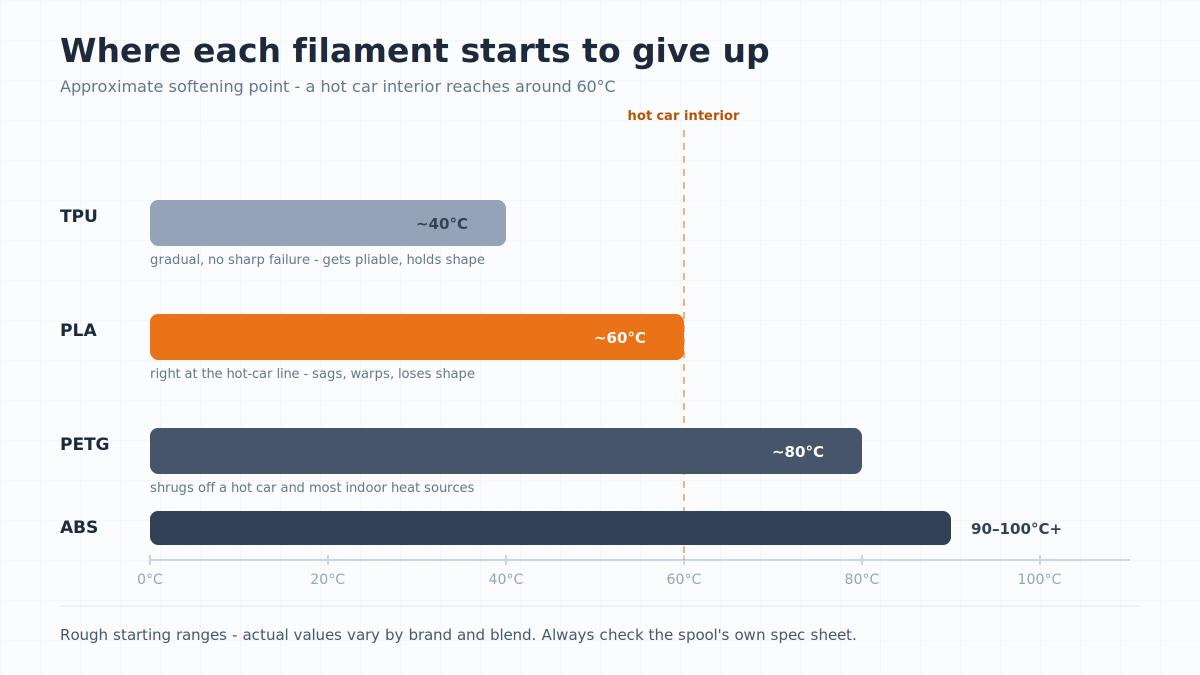
| Heat tolerance | Softens ~60°C | Holds to ~80°C | Holds past 90°C | Stays functional to ~70–80°C |
| Strength | Low–medium, brittle | 2–3× PLA, tough | Tough, impact-resistant | Flexible, won't snap |
| Speed | Takes high speeds well | Speed-sensitive - quality drops when pushed | Limited by your enclosure, not the plastic | Slow by nature (~40mm/s) |
| Price per kg | $15–25 | $20–30 | $20–30 | $30–45 |
| Difficulty | Easiest | Moderate | Hard | Hard (in a different way) |
Numbers vary by brand - treat them as starting ranges, and check the spool's own recommendations first.
PLA - the default, and usually the right one
Polylactic acid is what your printer shipped with a sample of, and for most home printing it never needs replacing. Made from plant sources like corn starch, it prints at low temperatures, barely warps, produces almost no odor, and works on an open-frame printer with no special build surface. It also comes in more colors and finishes than everything else on this list combined.
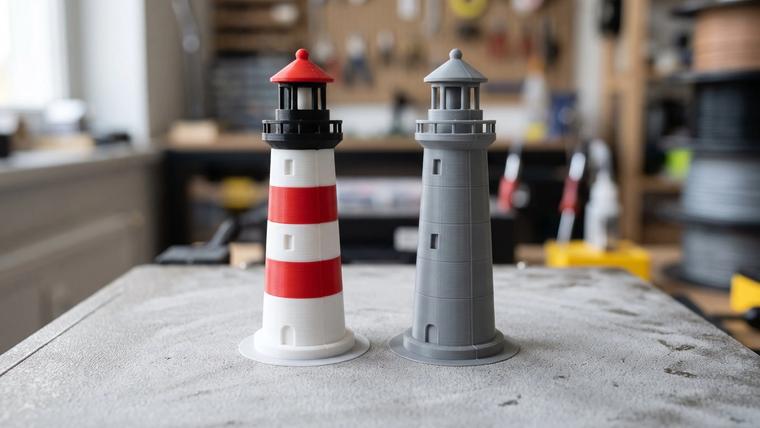
For printing downloaded models - miniatures, statues, decorative pieces, articulated toys - PLA gives the sharpest detail of the common materials and costs the least.
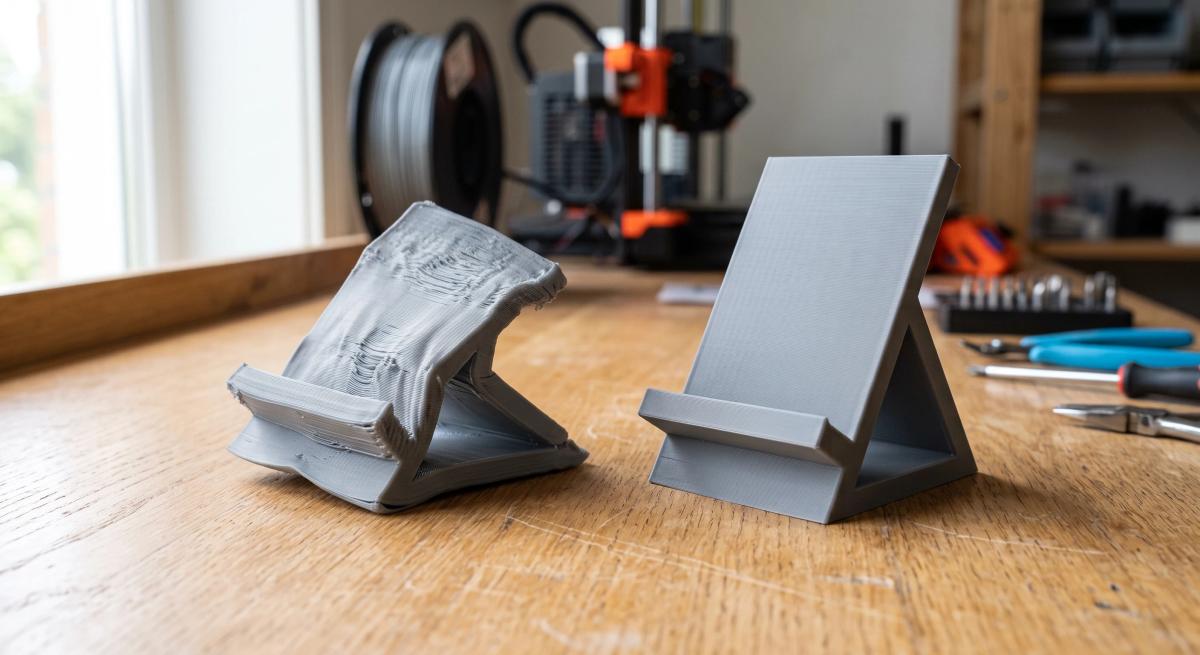
What it's bad at is specific and important: heat. PLA softens around 60°C. A car interior in July blows past that within an hour - leave a PLA phone mount on a dashboard and you'll come back to something that looks like it melted in a Dalí painting. It's also comparatively brittle: it snaps rather than bends under load, and prolonged direct sunlight makes it worse. None of that matters for a painted miniature on a shelf. All of it matters for a bracket in a garage.
Settings: 190–220°C nozzle, 50–60°C bed. A heated bed isn't strictly required, but it noticeably improves first-layer adhesion. Above roughly 70°C bed temperature, PLA parts start to curl.
PETG - the everyday functional material
PETG sits between PLA's easy printing and ABS's durability, and for most people it's the natural second filament. It's roughly two to three times stronger than PLA, resists impacts instead of shattering, handles temperatures up to around 80°C, and shrugs off moisture and outdoor exposure that ruin PLA. No enclosure needed.
It is fussier, though, in small ways that trip people up. PETG strings - fine wisps webbing between parts of the model - much more than PLA, so retraction settings actually matter here. It wants less part cooling than PLA, which feels backwards to everyone arriving from PLA. It bonds to build plates hard, occasionally too hard (let the bed cool before prying anything off). And it sands badly, which matters if your workflow involves smoothing.
Settings: 220–250°C nozzle (many people start around 235–240°C), bed 70–90°C. Layer strength improves noticeably toward the higher end of the nozzle range - if parts are splitting under load, go up 5°C at a time rather than down.
One thing that surprises people with fast modern printers: PETG doesn't like being rushed. Push it and you get matte patches, blobs around text and holes, and layers that don't bond properly - even on machines that fly through PLA. That's why manufacturers sell separate high-flow PETG formulations for high-speed printing. With standard PETG, slowing down is usually the fix for problems people spend hours chasing in other settings.
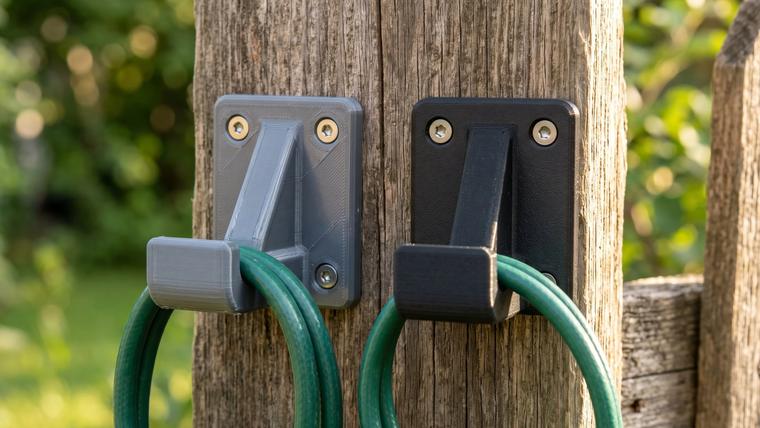
Print it when: the part has a job - brackets, hooks, organizers, tool holders, anything living outdoors, anything in a warm room, anything handled hard.
ABS and ASA - specialists, not everyday materials
ABS is one of the oldest filaments in desktop printing and by far the most demanding of the four. It shrinks measurably as it cools, and in open air that shrinkage does exactly what you'd expect: corners curl off the bed, and layers split apart mid-print. Try a large ABS box on an open-frame printer and there's a decent chance you'll find it cracked halfway up the wall a few hours in, with the room smelling of hot plastic. An enclosure holding ambient temperature around 40–60°C isn't a nice-to-have here. It's the whole game. Ventilation isn't optional either - ABS emits fumes, including styrene, while it prints.
So why bother? Because ABS does three things nothing else on this list does: it holds up to heat well past PETG's ceiling, it takes impacts that crack other plastics, and it can be smoothed with acetone vapor - a chemical finish that dissolves layer lines into glossy plastic with no sanding whatsoever.
ASA is essentially ABS reformulated for UV resistance. It prints much the same way and is the better choice for anything living in sunlight, where ABS yellows and grows brittle.
Settings: 230–250°C nozzle, 90–110°C bed, part cooling fan off, enclosure closed, no drafts.
Print it when: the part faces genuine heat, genuine impact, or needs an acetone-smooth finish - and your printer is enclosed. Otherwise PETG covers the same ground with a fraction of the frustration. When ABS is worth the trouble.
TPU - the flexible one
TPU is genuinely rubber-like: prints bend, stretch, compress, and spring back. Nothing else here substitutes for it. Phone cases, gaskets, seals, grips, straps, RC tires, shock absorbers - that's TPU's entire territory, and it owns it.
It prints slowly and particularly. Flexible filament wants to buckle instead of feeding, so a direct-drive extruder is strongly preferred; Bowden setups can manage firmer TPUs but fight the material. Expect speeds around 40mm/s, and don't expect fine detail - sharp features aren't its strength.
Its heat behavior is different from the rigid plastics here, and worth understanding. TPU is an elastomer - it doesn't have a sharp softening point where it gives up the way PLA does at 60°C. Instead it gradually gets more pliable as it warms, while holding its shape and springing back. Quality TPUs stay functional up to around 70–80°C, and some industrial grades considerably higher. A TPU phone case in a hot car gets softer; it doesn't slump.
Settings: 210–250°C nozzle (around 230°C is a common starting point), bed 30–60°C, slow speeds, minimal retraction.
Specialty PLAs - mostly cosmetic, genuinely useful
A large share of the "specialty filament" shelf is PLA with something mixed in. Since these print essentially like PLA, they're the safest way to change how a model looks without changing how it prints:
- Matte PLA - the layer-line hider. A diffuse finish that conceals stepping noticeably better than glossy, which makes it excellent for unpainted display models.
- Silk PLA - high-gloss, almost metallic sheen. Beautiful on simple shapes, but it emphasizes surface flaws rather than hiding them, so it rewards a well-tuned printer.
- Wood-fill - real wood fibers in PLA, sandable and stainable for a convincingly wooden finish. Mildly abrasive.
- Metal-fill - heavy, polishable, gives prints real heft. Abrasive.
- Glow-in-the-dark - the glow comes from phosphorescent particles, which are hard enough to wear a nozzle noticeably.
- Lightweight PLA (LW-PLA) - foams during extrusion to cut part weight dramatically. Valued for large cosplay armor and RC aircraft, where weight compounds fast.
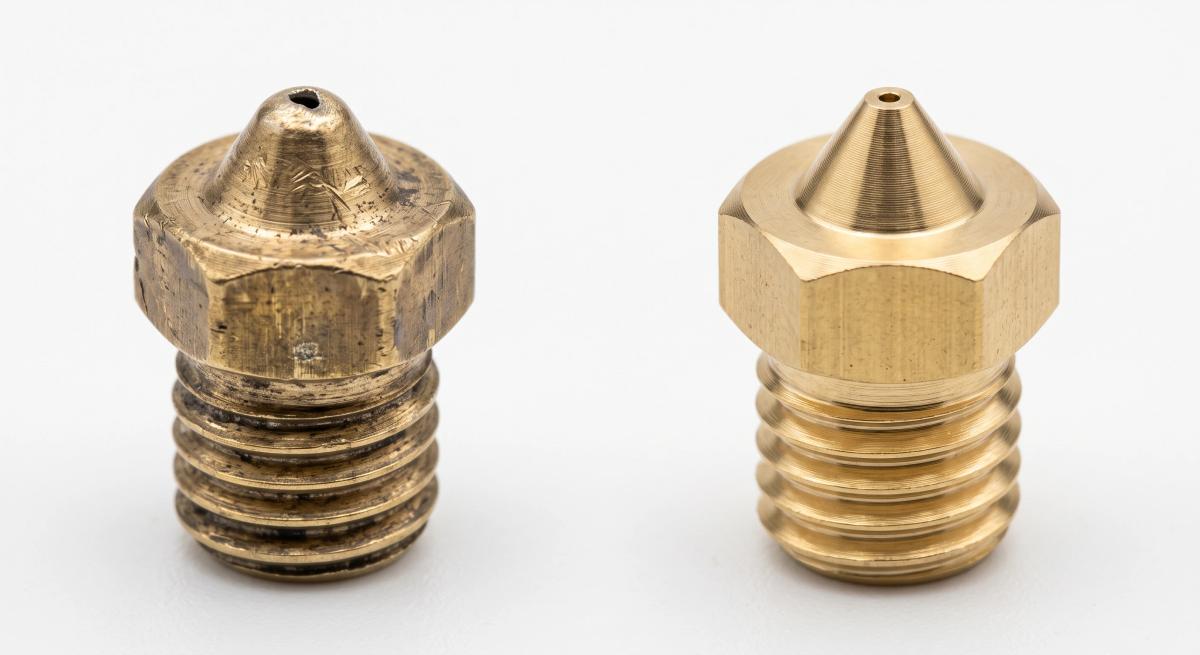
One thing worth knowing before you buy any of these: glow-in-the-dark, wood-fill, metal-fill, and fiber-reinforced filaments chew through a standard brass nozzle - a heavy user can wear one out in weeks. Get a hardened nozzle first. The annoying part is how gradual the wear is: lines widen slightly, detail softens slightly, and most people spend a month blaming their settings before they think to check the nozzle.
Everything else, in one paragraph
The materials that pad most filament guides out to twenty-plus entries are real, but largely irrelevant to home model printing: nylon (strong and wear-resistant, but extremely moisture-hungry and needs high temperatures), polycarbonate (exceptional strength and heat tolerance at 260–310°C nozzle temperatures most consumer printers can't reliably reach), carbon- and glass-fiber composites (stiff and light, abrasive enough to require hardened hardware), PEEK and PEI/Ultem (aerospace-grade, effectively industrial-machine-only), polypropylene (chemically resistant but notoriously unwilling to stick to a build plate), and PVA and HIPS (dissolvable support materials for dual-extrusion setups). All demand enclosures, dry storage, high-temperature hotends, or all three. If you're printing downloaded models, you will likely never need any of them - and if you're engineering load-bearing parts, that's a different hobby with its own guides.
Now: what should you load for what you're printing?
Profiles are useful. But you came here to pick something, so:
Miniatures and tabletop → PLA
Plain PLA or PLA+, and there's little reason to look further. It captures fine detail, needs no enclosure, and takes primer and paint beautifully. Exotic materials add difficulty without adding anything you'd see on a painted figure at tabletop distance. The one variation worth trying is matte PLA for pieces you plan to leave unpainted. FDM miniature technique.
Cosplay and wearables → PLA to learn, PETG to wear
Here the material depends less on printing than on where the piece ends up.
PLA is right for a first build or a display prop: easiest to print, and by far the easiest to sand - which matters enormously when a helmet needs six hours of surface work before primer.
PETG is what convention pieces want. It survives the hot car that deforms PLA and the crowd-floor knocks that crack it. And for large armor, look at lightweight PLA - weight compounds fast across a full costume worn from 9am to closing.
Flexi and articulated models → PLA
TPU seems like the obvious pick for something that bends. It isn't. Articulation in a print-in-place dragon comes from the joint geometry, not from soft material - and TPU's squish destroys the tiny clearances the designer engineered. Print them in PLA: stiff enough to hold joint shape, predictable enough that the clearances come out as intended.
Functional parts → PETG, with ABS/ASA when heat is real
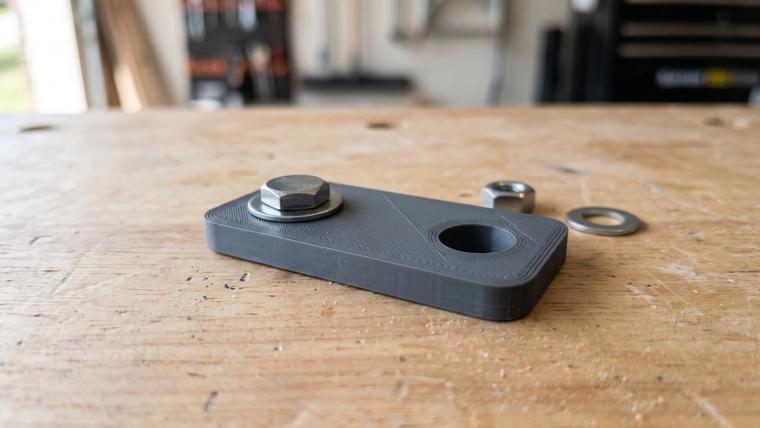
Brackets, hooks, organizers, tool holders. PETG is the default - strong, not brittle, handles moisture and sun, prints on any machine. Move up to ABS or ASA only when the part faces genuine heat or hard mechanical abuse. And PLA is honestly fine for indoor, low-stress functional prints: a shelf bracket in a cool room is not a structural challenge. Just keep it away from warmth.
Grippy, squishy, bendy → TPU
Phone cases, gaskets, grips, straps, tires. Nothing else does this job.
Storage: the problem nobody warns beginners about
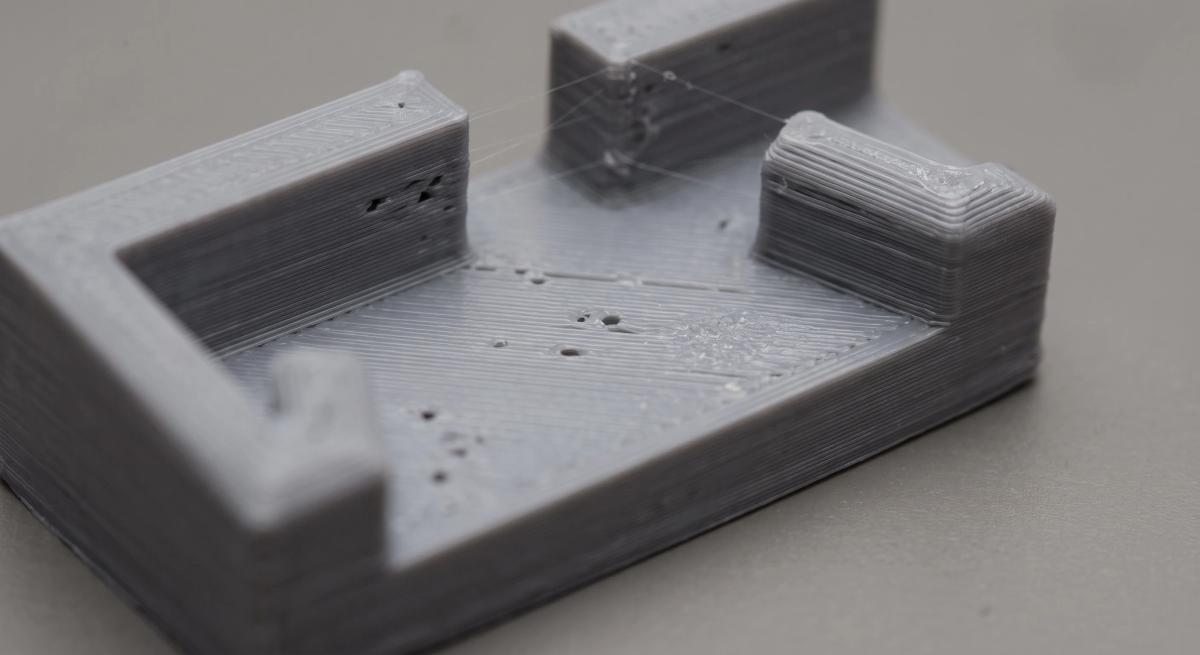
Filament absorbs moisture out of the air, and wet filament prints badly. You'll hear it before you see it - a faint popping and hissing as trapped water flashes to steam at the nozzle. Then come the strings, the rough surfaces, and layers that split under barely any load. This is the single most common cause of "my printer used to work fine and now it doesn't."
Some materials are thirstier than others. PETG, TPU, and nylon absorb fastest. PLA is relatively tolerant but not immune. ABS sits in between. In a humid climate, an open spool on a shelf can go noticeably bad in a matter of weeks.
What to do: sealed containers or vacuum bags with desiccant packs. It's cheap and it prevents the problem outright. If prints have already gone rough, a filament dryer usually brings the spool back after a few hours at the material's recommended temperature. A food dehydrator or a low oven can work in a pinch, though dedicated dryers won't warp the spool.
Buying filament: what actually differs
Beyond material type, three things separate good filament from the cheap spool that wastes an afternoon:
Diameter consistency. Filament is nominally 1.75mm, but quality brands hold a tight tolerance (typically ±0.02–0.03mm) and print it on the spool. Inconsistent diameter means inconsistent extrusion - visible as uneven surfaces and unpredictable strength.
Winding quality. Poorly wound spools tangle, and a tangle mid-print kills the job. This is where budget filament most often disappoints, and you can't tell until it happens.
Moisture at the point of sale. Filament sealed with desiccant at the factory arrives dry. Filament that's been sitting open in a warehouse hasn't.
Cheap filament isn't automatically false economy - plenty of budget PLA prints fine. But when print quality drops mysteriously on a machine that hasn't changed, filament is a more common culprit than settings.
One more practical note: switching materials means purging the nozzle. Residue from the previous filament - especially PLA, which chars at higher temperatures - contaminates and discolors the next one. PLA to PETG usually clears with a purge print; between more distant materials, swapping nozzles is safer.
Frequently asked questions
What is the best filament for 3D printing miniatures?
Plain PLA or PLA+ - it captures fine detail, needs no enclosure, and takes primer and paint well. Matte PLA is worth considering for unpainted display models because it hides layer lines better than glossy. Exotic filaments add difficulty without visible benefit on a painted figure.PLA or PETG - which should I use?
PLA for models, miniatures, and anything decorative that stays indoors. PETG the moment heat, weather, or real stress enters the picture - it's two to three times stronger and holds up to around 80°C. You pay for that with stringier printing and much worse sanding.What temperature should I print each filament at?
Rough starting ranges: PLA 190–220°C nozzle with a 50–60°C bed; PETG 220–250°C with 70–90°C; ABS 230–250°C with 90–110°C plus an enclosure; TPU 210–250°C with 30–60°C. Always start from the spool's own recommendation and tune from there.Do I need an enclosure for 3D printing?
Not for PLA, PETG, or TPU - open-frame machines handle all three fine. ABS and ASA effectively require one, plus ventilation for fumes. Nylon and polycarbonate expect an enclosure too, but if you're printing those you already knew that.Which filaments need a hardened nozzle?
Glow-in-the-dark, wood-fill, metal-fill, and any carbon- or glass-fiber blend. Brass is fine for PLA, PETG, ABS, and TPU.Why do my prints look stringy and rough with filament that used to work?
Almost always moisture. Filament absorbs water from the air, and damp filament strings, pops audibly while printing, and produces rough, weak layers. PETG, TPU, and nylon absorb fastest. Store spools sealed with desiccant, and dry them if quality has already degraded.Are 3D printed parts food safe?
Treat them as not food safe by default, for two separate reasons. The microscopic gaps between printed layers trap bacteria and resist proper cleaning. And standard brass nozzles are typically made from leaded machining alloys, so trace lead can end up in the plastic they extrude - one reason food-contact printing calls for a stainless steel nozzle at minimum. Parts intended for food use also need a food-safe sealing coating.How much does 3D printing filament cost?
Standard PLA and PETG run roughly $15–30 per kilogram, ABS and ASA about the same, TPU somewhat higher at $30–45. Specialty and engineering materials climb from there. Per model it barely registers - a typical miniature uses a few cents' worth of plastic, which is why the file usually costs more than the material.
About the author
Written by
Ethan MillerI’m a 3D printing specialist with a background in mechanical design and hands-on experience with FDM 3D printing. I focus on filament selection, slicer settings, print optimization, and troubleshooting common printing issues. I enjoy testing different materials and printing techniques and sharing practical guides that help makers get more consistent and reliable results from their printers.